Rajasthan School Education Crisis: 1.21 Lakh Vacant Posts Threaten Board Exams
Super Admin··6 min read
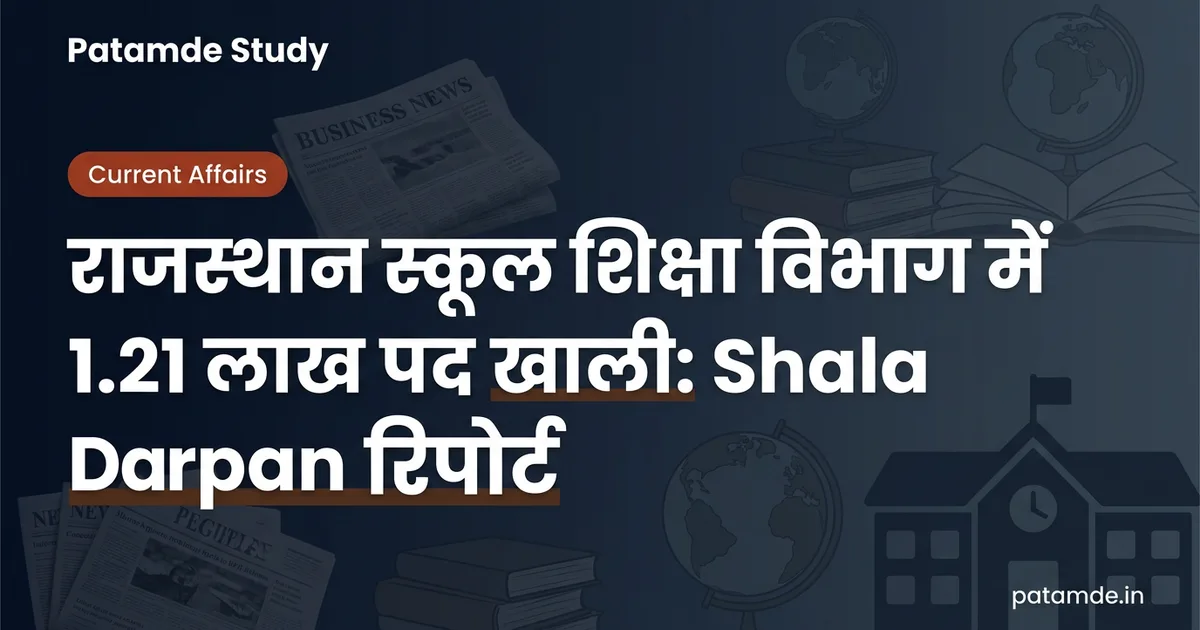
The school education system in Rajasthan is currently facing an unprecedented human resource crisis. According to the latest data from the official Shala Darpan portal, a staggering 1.21 lakh posts are vacant in government schools and the state education department. This massive deficit means that nearly 29% of all sanctioned positions—or almost one in every three jobs—remain unfilled.
With board examinations and quality learning standards on the line, this shortage of teachers and administrative staff poses a severe threat to the academic future of millions of students across the state. For government job aspirants, however, this data highlights an imminent wave of upcoming Rajasthan teacher vacancies and recruitment drives.
Key Highlights: 1.21 Lakh Vacant Posts Across Cadres
The Shala Darpan portal data highlights a total of 1,21,640 vacant posts in Rajasthan’s government schools and education department. The shortage is not limited to a single cadre but spans across administrative heads, senior lecturers, subject-specific teachers, computer instructors, and essential support staff.
The primary takeaways from the official statistics include:
- Overall Vacancy Rate: Approximately 29% of all sanctioned posts in the government school system are currently lying vacant.
- The Hardest Hit Cadre: The Senior Teacher (Grade II) cadre has the highest number of vacant seats, with over 51,877 positions waiting to be filled.
- Support Staff Deficit: Class IV employee shortages are severely impacting daily school administration, with over 24,384 vacant posts.
- Digital Education Lag: Despite the government's push for digital literacy, thousands of computer labs are locked or underutilized due to a shortage of Basic Computer Instructors.
Cadre-Wise Breakdown of Vacancies in Rajasthan Schools
To understand the depth of the crisis, it is essential to look at the official cadre-wise distribution of sanctioned, working, and vacant posts within the Rajasthan School Education Department.
| Cadre / Post Name | Sanctioned Posts | Working Employees | Vacant Posts |
|---|---|---|---|
| Senior Teacher (वरिष्ठ अध्यापक) | 1,10,447 | 58,570 | 51,877 |
| Class IV Employee (चतुर्थ श्रेणी कर्मचारी) | 29,631 | 5,247 | 24,384 |
| Lecturer - School Education (प्राध्यापक) | 59,548 | 44,321 | 15,227 |
| Junior Assistant (कनिष्ठ सहायक) | 12,371 | 6,016 | 6,355 |
| Basic Computer Instructor (बेसिक कंप्यूटर अनुदेशक) | 9,854 | 6,150 | 3,704 |
| Principal (प्राचार्य) | 19,392 | 16,639 | 2,753 |
| Total Vacancies Documented | 2,40,843 | 1,36,943 | 1,04,300* |
*Note: The overall education department vacancy stands at 1,21,640 when accounting for all minor cadres and administrative offices beyond the primary school-level posts listed in the main cadre table.
The Critical Shortage of Senior Teachers and Its Impact on Board Exams
The most alarming statistic from the Shala Darpan portal is the shortage of Senior Teachers (Grade II). Out of 1,10,447 sanctioned posts, only 58,570 teachers are currently active in classrooms. This leaves a massive deficit of 51,877 vacant Senior Teacher posts.
Senior Teachers are responsible for teaching students in Class 9 and Class 10. They cover core academic subjects that form the foundation of secondary education, including:
- Mathematics
- Science
- English
- Social Science
Because Class 10 is a board exam year, the absence of specialized subject teachers directly impacts student preparation and overall pass percentages. When schools lack dedicated educators for core science and math subjects, students are forced to rely on self-study or temporary arrangements, leading to a natural decline in academic performance.
Computer Labs but No Instructors: The Infrastructure Gap
In recent years, the Rajasthan government has heavily invested in digital infrastructure, setting up advanced computer labs in thousands of schools. However, the lack of human resources has rendered much of this hardware idle.
There are currently 3,704 vacant posts for Basic Computer Instructors out of 9,854 sanctioned positions. Without qualified instructors to guide them, students are unable to access regular computer education, widening the digital divide between rural government school students and their private school counterparts.
The Class IV Staff Crisis and Administrative Burden
Another major bottleneck is the shortage of Class IV employees, with 24,384 vacant posts out of 29,631 sanctioned roles. Only 5,247 Class IV employees are currently working.
This extreme shortage has a cascading effect on teachers:
- Administrative Overload: In the absence of support staff, working teachers are forced to handle non-teaching, administrative, and clerical duties.
- Reduced Teaching Hours: Managing midday meals, maintaining school cleanliness, handling gatekeeping, and managing paperwork takes away valuable classroom teaching hours.
- Departmental Mitigation: To address this specific issue, the education department has initiated recruitment processes for over 16,000 Class IV posts, with appointments expected to roll out by next month.
Rural Areas Bear the Brunt of the Staff Shortage
Educational experts point out that the impact of these vacant posts is highly unequal, with rural and remote areas suffering the most.
In urban centers, schools often manage to maintain a reasonable teacher-student ratio. However, in remote villages:
- Limited Subject Experts: Many schools operate with just one or two teachers handling multiple classes and subjects outside their areas of expertise.
- High Dropout Rates: The lack of consistent, quality teaching in rural schools often leads to higher student dropout rates, particularly among girls transitioning from middle to high school.
- Failing Learning Outcomes: Annual learning assessment surveys consistently show a decline in basic reading and arithmetic skills in rural schools where teacher vacancies remain high for consecutive academic terms.
Expert Insights: The Path Forward through DPC and Direct Recruitment
According to Vijay Shankar Acharya, former Deputy Director of Secondary Education, Rajasthan, resolving this crisis requires a systematic, time-bound approach rather than temporary stop-gap measures.
"To eliminate the teacher shortage in schools, it is crucial for the department to conduct timely Departmental Promotion Committees (DPCs) and streamline fresh appointments. The department must calculate annual vacancies arising from retirements and school upgradations in advance and adopt a time-bound recruitment process."
The Two-Pronged Challenge
- Accelerating Departmental Promotions (DPC): Thousands of promotions from Senior Teacher to Lecturer, and Teacher Grade III to Senior Teacher, remain pending. Completing these promotions on time will instantly fill higher-level academic and administrative vacancies.
- Speeding Up Regular Recruitment: Regular, direct recruitment examinations must be conducted swiftly. If these vacant positions are not filled on a priority basis, achieving the quality benchmarks outlined in the National Education Policy (NEP) will remain an uphill task for Rajasthan.
What This Means for Rajasthan Govt Job Aspirants
While the current vacancy figures highlight a systemic challenge for the state's education system, they also represent a massive window of opportunity for government job seekers.
To fill these gaps, the Rajasthan Public Service Commission (RPSC) and the Rajasthan Staff Selection Board (RSSB) are expected to announce major recruitment drives. Aspirants preparing for the following exams should accelerate their preparation:
- RPSC 1st Grade (School Lecturer)
- RPSC 2nd Grade (Senior Teacher)
- Rajasthan Computer Instructor Exam
- Rajasthan REET (Grade III Teachers)
To stay ahead of the competition and access comprehensive exam resources, check out the study guides, syllabus breakdowns, and exam preparation strategies available on Patamde Study. Keeping a close eye on official notification releases and starting your preparation early will be key to securing a spot in the upcoming recruitment cycles.