Coaching Fee Refund Rules: Know Your Legal Rights as a Student
Super Admin··7 min read
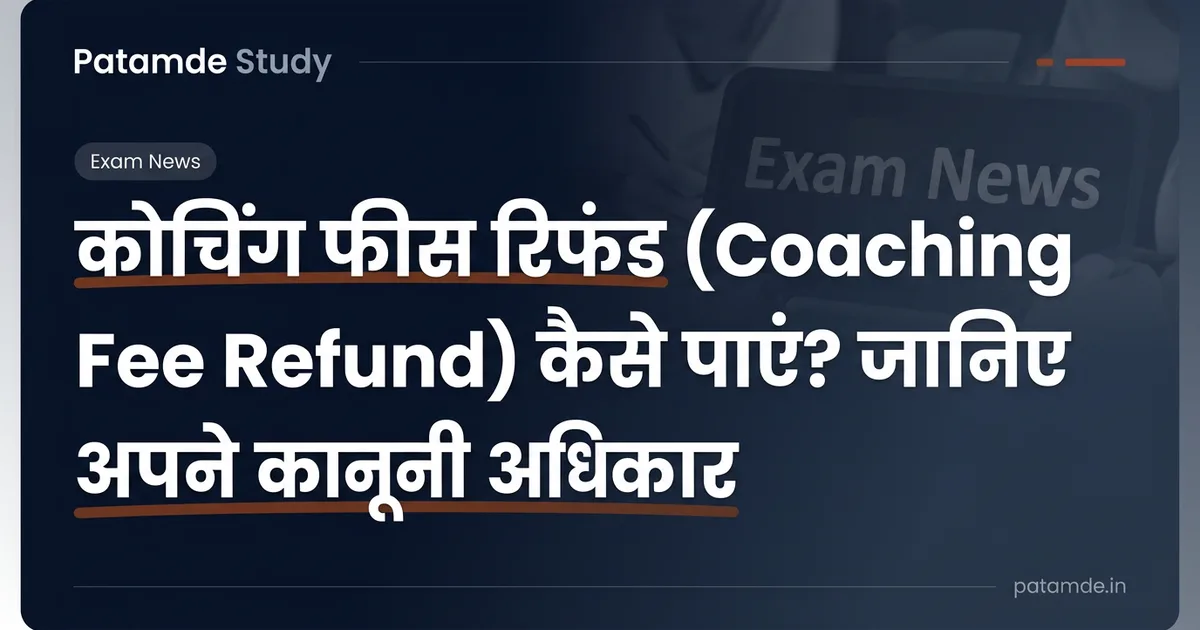
Every year, thousands of students across India enroll in private coaching institutes with the hope of cracking competitive exams. However, circumstances often change, and seeking a coaching fee refund is one of the most common yet stressful challenges students and parents face. Whether you have found admission to a better college, are dissatisfied with the quality of education, or have to leave due to personal reasons, getting your hard-earned money back can often feel like an uphill battle.
Many coaching centers outright deny refund requests by pointing to a "non-refundable" clause on their admission forms. But does a simple disclaimer strip you of your consumer rights? According to legal experts, the answer is a resounding no. Understanding when you are legally entitled to a coaching fee refund is crucial to protecting your financial and academic interests.
Does a "No Refund" Clause Protect the Institute?
A common tactic used by coaching centers is displaying a bold "No Refund" or "Fees Non-Refundable" term on their prospectus, brochure, or admission form. However, simply writing this clause does not give an institute absolute immunity.
If a student has not availed of the complete services, or if there is a clear deficiency in service or unfair trade practice on the part of the institute, the Consumer Commission has the authority to order a refund. The law does not allow institutes to collect hefty fees upfront and then provide subpar services under the shield of a "no refund" policy.
Key Takeaway: A "No Refund" clause is not legally binding if the coaching institute fails to deliver its promised services or engages in unfair trade practices.
However, the rule of equity applies both ways. If a student has completed a major portion of the course and the coaching institute has fulfilled all its commitments without any lapses, demanding a full refund may not be legally sustainable. Every case is evaluated by consumer courts based on its unique facts and circumstances.
Common Triggers for Coaching Fee Disputes
Disputes regarding fee refunds generally arise due to a mismatch between student expectations and the institute's delivery, or due to sudden changes in a student's life. These triggers can be broadly categorized into student-centric and institute-centric reasons:
| Student-Centric Reasons | Institute-Centric Reasons |
|---|---|
| Securing admission to a better college or government institution. | Substandard teaching quality or dissatisfaction with the pedagogy. |
| Having to leave the course due to sudden health or medical issues. | Failure to provide the promised faculty members or batch timings. |
| Personal or family emergencies that prevent the student from continuing. | Lack of advertised facilities, study materials, or infrastructure. |
| Shifting to a different city or changing academic streams. | Securing admissions by making false claims or misleading advertisements. |
When Does a Fee Refund Become Your Legal Right?
Your claim for a coaching fee refund becomes exceptionally strong under specific circumstances. If your situation falls under any of the following categories, you have a solid legal ground to demand your money back:
- Course Has Not Started: If you withdraw your admission before the classes have officially commenced, the institute has no right to withhold your entire fee.
- Unfulfilled Promises: If the coaching center fails to deliver on the specific promises made in their advertisements, banners, or official brochures.
- Deficiency in Service: If there is a severe drop in the quality of education, or if key facilities and promised faculty members are suddenly changed or unavailable.
- Minimal Service Availed: If you decide to leave the institute after attending only a few initial classes, meaning you have not consumed a major portion of the course curriculum.
- Misleading Information: If the institute used deceptive marketing, fake success rates, or false assurances to pressure you into taking admission.
- Breach of Contract: If the coaching center violates any of the written terms, conditions, or agreements mutually agreed upon at the time of admission.
Crucial Evidence: Documents You Must Preserve
If you find yourself in a dispute with a coaching institute, having a paper trail is your strongest asset. To build a robust case, make sure you safely preserve the following documents:
- Payment Proofs: Original fee receipts, bank statements, or digital transaction screenshots showing the exact amount paid.
- Admission Documents: The filled-out admission form, prospectus, brochure, and the printed terms and conditions of the institute.
- Marketing Material: Screenshots of the institute’s website, advertisements, social media posts, or pamphlets that influenced your decision to join.
- Communication Records: Saved emails, WhatsApp chats, or SMS exchanges with the management or faculty members.
- Written Refund Request: A copy of the formal written application you submitted to the institute requesting a refund, along with their written response or acknowledgment of receipt.
- Proof of Deficiency: Any evidence (such as class schedules, sudden faculty changes, or lack of study material) that proves the institute failed to deliver on its promises.
Step-by-Step Legal Procedure to Claim Your Refund
If a coaching institute refuses to return your money, you can take systematic legal action to recover it. Initiating the legal process for a coaching fee refund requires a structured approach:
Step 1: Submit a Formal Written Request
Do not rely on verbal discussions. Submit a formal written application detailing your reasons for leaving and requesting a refund. Ensure you get a stamped acknowledgment of receipt from the institute's office, or send it via registered post/email so you have proof of delivery.
Step 2: Send a Legal Notice
If the coaching center ignores your request or gives an unsatisfactory response, you can consult an advocate to send a formal legal notice. This notice warns the institute of impending legal action if they fail to resolve the matter within a specified timeframe (usually 15 days).
Step 3: File a Consumer Complaint
If the legal notice does not yield results, you can file a formal complaint under the Consumer Protection Act, 2019. This complaint should be registered with the relevant District Consumer Disputes Redressal Commission (Consumer Court).
Step 4: Approach the Central Consumer Protection Authority (CCPA)
If your dispute is deeply rooted in misleading advertisements, false claims of selection rates, or systemic unfair trade practices, you can also escalate the matter by filing a complaint with the CCPA.
Legal Remedies and Relief You Can Seek
When you approach the Consumer Commission, the law provides various forms of relief depending on the severity of the unfair trade practice. The court can order:
- Refund of the Balance Amount: Directing the institute to return the unutilized portion of the fee.
- Refund with Interest: Ordering the refund amount to be paid back along with a reasonable rate of interest from the date of payment.
- Compensation for Damages: Awarding financial compensation for the mental agony, stress, and academic loss suffered by the student.
- Litigation Expenses: Directing the institute to cover your legal costs, court fees, and lawyer fees.
- Punitive Actions: Directing the institute to cease unfair trade practices and remove misleading advertisements.
Can Criminal Action Be Taken?
A standard fee refund dispute is civil and consumer-centric in nature and does not automatically constitute a criminal offense. However, if the coaching institute intentionally made fraudulent promises to lure you in, used forged documents, or engaged in deliberate cheating and criminal breach of trust, a police complaint and subsequent criminal action can be initiated based on the specific facts of the case.
Proactive Steps to Take Before Paying Admission Fees
Saving yourself from a tedious coaching fee refund battle is always better than fighting one. Before handing over your money, take these proactive measures to safeguard your interests:
- Review the Policy Thoroughly: Always read the fine print of the admission form and the refund policy before signing.
- Avoid Verbal Promises: Never rely on verbal assurances given by counselors or administrative staff. If they promise a trial period or a partial refund option, insist on getting it in writing on the official receipt or letterhead.
- Avoid Lump-Sum Payments: Try to pay the course fees in monthly or semester-wise installments rather than paying the entire course fee upfront. This minimizes your financial risk if you decide to leave mid-way.
- Verify the Credentials: Research the institute’s actual track record, market reputation, and past student reviews instead of blindly trusting shiny billboards.
- Use Banking Channels: Always make payments through traceable banking channels, such as net banking, UPI, credit/debit cards, or account payee cheques, to maintain an indisputable proof of payment.
Navigating competitive exam preparation is challenging enough without the added stress of financial disputes. Staying informed of your consumer rights ensures you can focus entirely on your academic goals. For comprehensive study guides, exam notifications, and preparation strategies to help you succeed on your academic journey, keep following Patamde Study.